We have been using yeast for thousands of years. Yet we may only be beginning to appreciate what it can do.
Bread. Beer. Wine.
Mention yeast and these are probably the foods that first come to mind.
But yeast is far more interesting than the familiar packet of baker's yeast sitting in a kitchen cupboard.
For food manufacturers navigating the shift towards plant-based, organic and more thoughtfully formulated foods, yeast offers an intriguing combination of tradition and innovation.
For Agrano, organic yeast is not simply a commodity. It is a platform for fermentation-led ingredient development.
A microscopic ingredient with an enormous history
Humans have used yeast in food production for thousands of years, long before we understood what yeast was.
These microscopic organisms are responsible for some of the most important transformations in food culture.
They help dough rise. They ferment beverages. They contribute flavour and aroma.
Once their fermentation work is complete, yeast can also become a valuable ingredient in its own right.
Nutritional yeast flakes are one familiar example. Yeast powders, extracts, autolysates and specialist fermentation ingredients extend the possibilities considerably further.
The flavour challenge in plant-based food
Removing animal-derived ingredients from a formulation can change much more than its nutritional profile.
It can also remove richness, savouriness and depth.
That creates one of the recurring challenges in plant-based product development: how do you build satisfying flavour using ingredients suited to the product's plant-based positioning?
Yeast ingredients can be part of the answer.
Their naturally savoury and umami characteristics make them relevant across a wide range of formulations, including:
- soups and stocks
- sauces and gravies
- seasonings
- savoury spreads
- plant-based cheese alternatives
- snacks
- ready meals
- dry meal solutions
The objective is not necessarily to make a product taste like yeast.
It is to use the appropriate yeast ingredient to make the finished product taste more complete.
Nutrition adds another dimension
Yeast is also nutritionally interesting.
Depending on the product and how it has been produced, yeast ingredients may contribute protein, vitamins, minerals and other naturally present nutritional components.
This creates opportunities for manufacturers looking beyond ingredients that perform only one function.
An ingredient that contributes savoury flavour while supporting a product's nutritional profile may be considerably more valuable than one included for a single purpose.
Bioreal® Organic B12 Yeast Flakes demonstrate how far fermentation-led ingredient development can go.
The flakes combine organic yeast with fermentation-derived vitamin B12 produced by selected non-GMO microorganisms on organic raw materials. A 5 g reference quantity provides approximately 2.25 μg of vitamin B12. Finished-product claims and serving information must be assessed under the requirements of the intended market.
This is one example of using biological processes to create an ingredient with a distinctive combination of flavour, nutrition and organic credentials.
Cultivation can become part of product design
This may be one of the most interesting ideas surrounding yeast.
Food innovation does not always have to happen after an ingredient has been produced.
Sometimes it can begin while that ingredient is being cultivated.
- Yeast is a living microorganism.
- Its cultivation medium matters.
- Its feedstock matters.
- Its fermentation conditions matter.
- The way it is harvested and processed matters.
By understanding and controlling those processes, specialist producers can develop yeast and fermentation ingredients with particular functional, sensory or nutritional characteristics.
That turns yeast production from basic fermentation into something closer to ingredient design.
Then there is the organic question
For manufacturers developing certified organic foods, yeast presents another consideration.
Producing genuinely organic yeast involves more than placing conventional yeast into an otherwise organic finished product.
The cultivation process and raw materials matter.
Agrano began developing its organic yeast production method in partnership with Swiss universities and universities of applied sciences in 1983. Bioreal® organic yeast entered pilot production in 1995, followed by the establishment of Agrano and its industrial production facility in Germany in 1996.
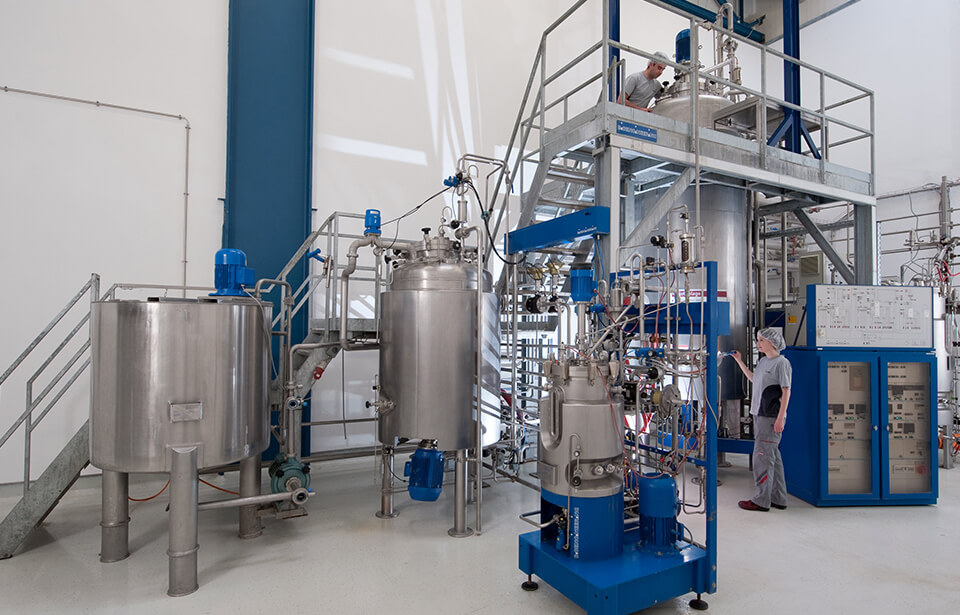
Under Agrano's patented Bioreal® production method, selected yeast strains are cultivated using organic raw materials. The process avoids chemical and synthetic additives during fermentation and does not require the yeast to be washed after cultivation.
This work helped establish Agrano as a pioneer in organic yeast production and formed the foundation of the Bioreal® range.
Old-world fermentation meets modern food innovation
Much of today's food innovation is presented as though the future must be completely new.
Sometimes it is not.
Fermentation is ancient. Yeast is ancient.
What is changing is our ability to understand and control biological processes with greater precision.
This creates a fascinating intersection between traditional food production and modern food technology.
It is particularly relevant as manufacturers search for ingredients capable of meeting several demands simultaneously:
- Plant-based.
- Organic.
- Nutritionally useful.
- Flavourful.
- Versatile.
- Understandable to consumers.
Different yeast ingredients can contribute to different parts of that challenge.
Beyond replacing animal ingredients
The first generation of plant-based products focused heavily on substitution.
- Replace the burger.
- Replace the sausage.
- Replace the cheese.
- Replace the milk.
The next stage can be much broader.
Instead of asking only how closely a plant-based product can imitate an animal-derived one, manufacturers can ask: what genuinely appealing foods can we create using the ingredients and biological processes available to us?
Yeast deserves a place in that conversation.
Not because it is new, but because it combines thousands of years of human experience with expanding modern fermentation capability.
Its role can extend from leavening and fermentation to savoury flavour, nutrition and specialist ingredient development.
Decades of specialist organic yeast development
Agrano has been producing organic yeast for decades.
Its range now includes organic dried yeast, yeast extracts, powders and flakes.
Bioreal® Organic B12 Yeast Flakes are one recent development within that broader story.
The most interesting question is not only what yeast has already allowed us to make.
It is what manufacturers might make with it next.
Explore the potential of organic yeast
MH Bioreal is the Australian importer, distributor and commercial supplier of Agrano's Bioreal® organic yeast range.
We connect Australian food manufacturers, organic brands, product developers, wholesalers and distributors with specialist German organic yeast and fermentation ingredients.
Talk to MH Bioreal about ingredients, applications, technical specifications, samples and commercial supply.